What Could Be Bad

Mental Health Storytelling

What Could Be Bad is an educational and informational podcast designed to elevate and de-stigmatize mental health conversations. Talks and storytelling between host Benj Gershman and guest will focus on unique life experiences, human connection, personal resilience and positivity.
Be the first to know about the latest What Could Be Bad news

The Podcast

What if it wasn't so taboo to talk about your most personal issues? What can we learn from being more open? What can we share that may help someone else?

We are here to tell our stories, to learn from one another, and share the tools we use when needed. Be inspired and break the cycle of private trauma.

What Could Be Bad® will discuss personal journeys. We all face unique challenges. We all benefit from having a safe place to share, learn from each other, and create a cultural shift in the process.

The Host

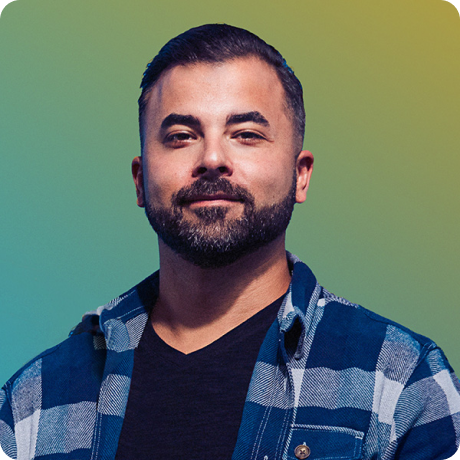
While touring with O.A.R. in February 2020, Benj Gershman was hit with Covid-19, recovered temporarily, then developed a resulting auto-immune disease and what is now known as Long Covid - rendering him disabled for the better part of two years. Unable to walk, unable to hold a music instrument, unable to pick up his one year old son. Healing through physical and occupational therapy, followed by personal training, Benj's mental health was left unaddressed and negatively manifested in forms of anxiety, anger, loneliness and depression. After crisis was reached; private support, therapy and medication were helpful in allowing him to weather the storm. Rebalancing, Benj began to share about his experience. The response from family, friends and social network connections was strong, constructive and inspiring. This was the genesis for What Could Be Bad®.
The Name

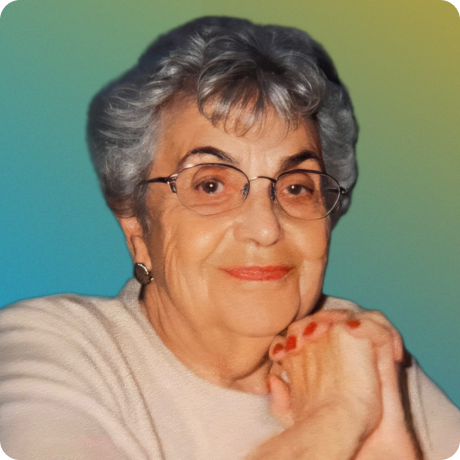
The podcast name honors and commemorates Louise Chesler, Benj's maternal grandmother - always a teacher, who while in hospice battling Lyme Disease, Alzheimers and dementia had a moment of clarity upon Benj's final visit. Holding hands, he began amidst tears, "It's Benj, I'm here, Granny. I love you. How are you feeling today?" Their eyes locked, her hand squeezed his, she smiled and said, "what could be bad?" Then drifted off to rest. At her end, deeply and truly, she passed on a gracious acknowledgement of submission, acceptance, gratitude and joy. These conversations will center around these words.

Episodes

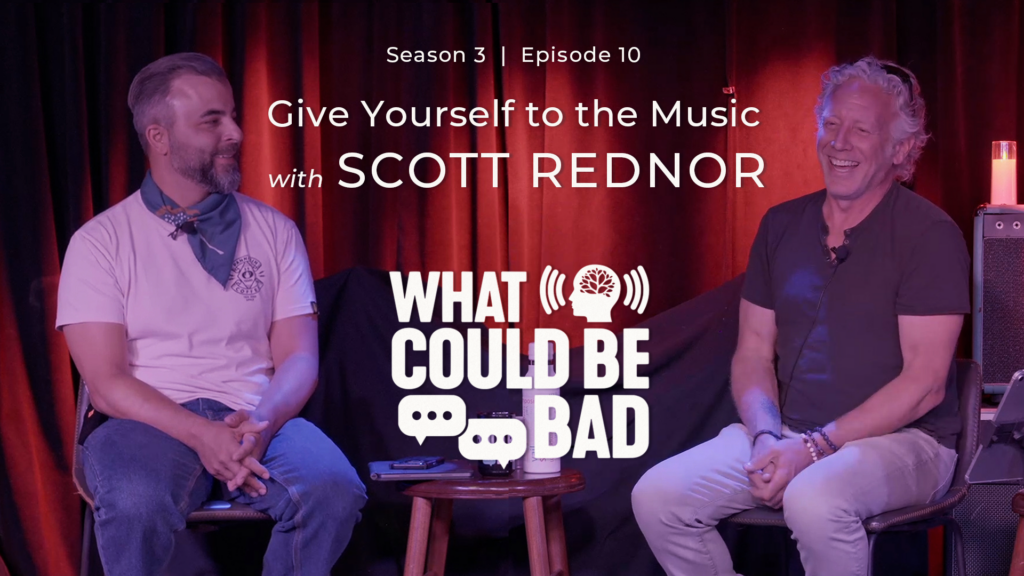
Benj sits down live at the Shakedown Bar in Vail with musician and venue owner Scott Rednor, whose lifelong relationship with music began on the Suzuki violin and wound through clarinet, cello, and guitar before a seventh-grade dance gig hooked him for good. Scott opens up about the gut-punch moment his band Dear Liza imploded mid-tour — the van’s engine and the group blowing up in the same instant — and how that collapse sent him into a period of carpentry, creative drought, and crying in a closet before vulnerability finally cracked open a flood of his best songwriting. His path back to music led him to the Vail Valley, where he took a cover-gig he didn’t want as a stepping stone, built a loyal following at the Red Lion, and eventually created the Shakedown Bar — a community anchor now collecting a decade of memories for a coffee table book. The conversation goes deep on the mental health challenges unique to seasonal mountain towns, the dangers of screens for kids, and what it really means to give yourself to the music and trust it will give back.
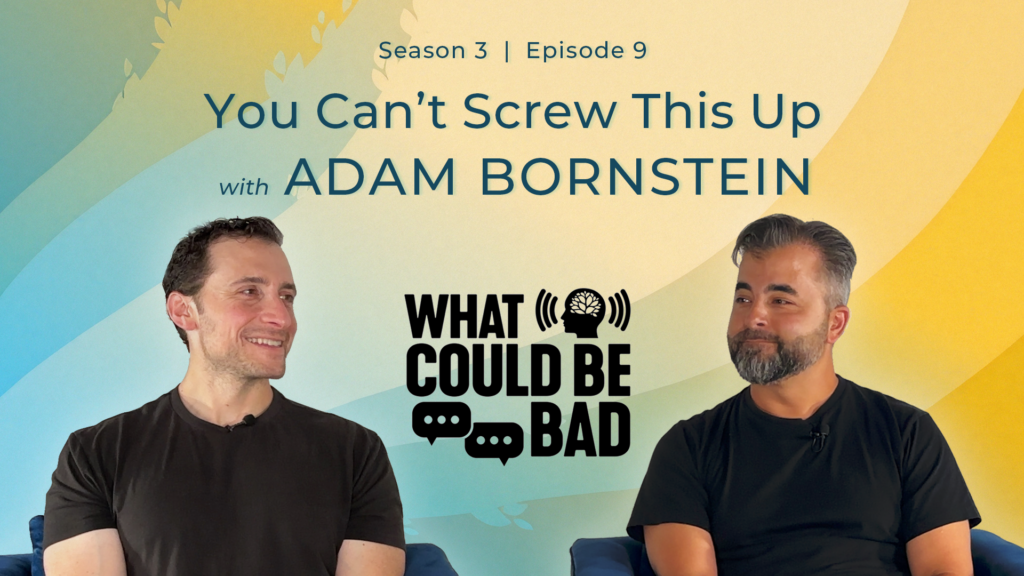
What does it actually take to rebuild your health, your mind, and your life when the odds are stacked against you? In this powerful episode, Benj sits down with bestselling author, elite performance coach, and co-founder of Arnold Schwarzenegger’s Pump Club, Adam Bornstein — a man who survived a mysterious recurring 104-degree fever, broke his back twice as a teenager, and turned every setback into a blueprint for resilience, longevity, and mental strength. They go deep on the psychology of health optimization, why pain is a signal not a sentence, how grief can become fuel, and what it really means to build communities that save lives. If you’ve ever been told what you can’t do — this episode is your permission slip to prove them wrong.
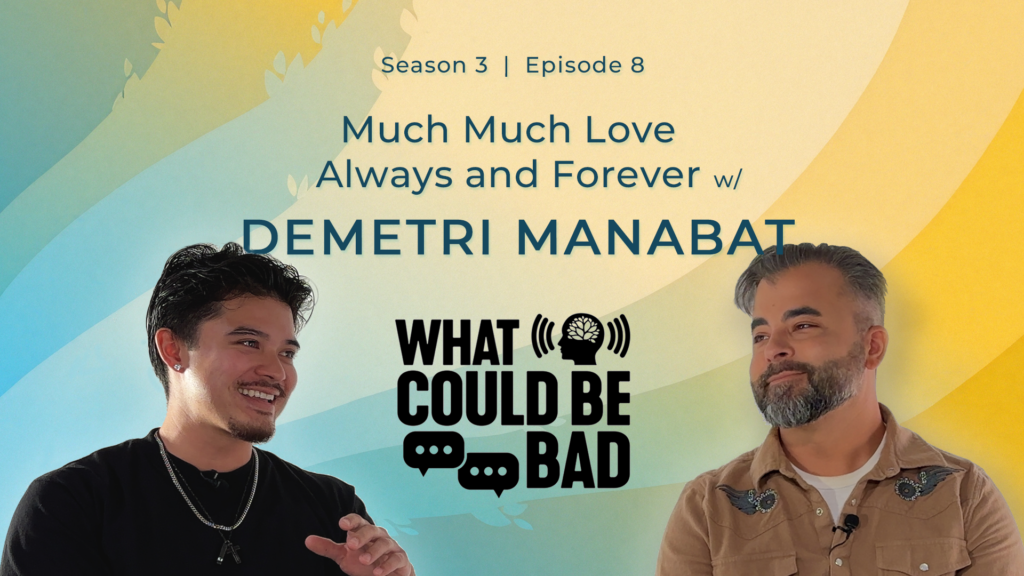
Benj sits down in Las Vegas with spoken word poet Demetri Manabat, whose viral poem "Barbie" first caught Benj's attention during a difficult personal period — and sparked a real friendship. Demetri traces his origin story: a spontaneous creative writing class in his final college semester, a poetry slam on his 21st birthday, and a slow pivot away from the career path his Filipino and Mexican parents expected toward one he found cathartic and world-changing. The conversation goes deep on grief. Demetri opens up about losing his father, the two years it took him to even speak about the loss, and how his fiancée — a childhood sweetheart since age 12 — became his anchor through the pain. By the end, the two land on something simple and true: grief is just love with nowhere to go. And choosing to keep loving anyway is the most honest way through it.
Recorded at Vatom House in Venice Beach, serial entrepreneur and tech visionary Eric Pullier opens up to Benj about a life that has taken him from co-founding one of Southern California's first internet incubators with Microsoft co-founder Paul Allen as his first investor, to surviving the dot-com crash, a brutal DOJ and SEC investigation that threatened him with 30 years in prison, and ultimately having all charges dropped in the interest of justice. In a rare and candid conversation, Eric traces the origin of programmable NFTs — an idea born over a beer while thinking about the Satoshi whitepaper — and his groundbreaking work alongside futurist and XPRIZE founder Peter Diamandis and AI pioneer Emad Mostaque on sovereign AI governance engines designed to bring open-source governance to countries around the world. Weaving together Surgeon General Vivek Murthy's loneliness epidemic, David Brooks' concept of the second mountain, and Jacqueline Novogratz's Acumen Fund model, Eric and Benj explore how in-person human connection, authentic purpose, and the entrepreneurial spirit are real antidotes to the mental health crisis defining our generation. This is a masterclass in resilience — from a man who has started 16 companies, faced financial ruin more than once, and come out the other side saying he's never had more fun in his life.
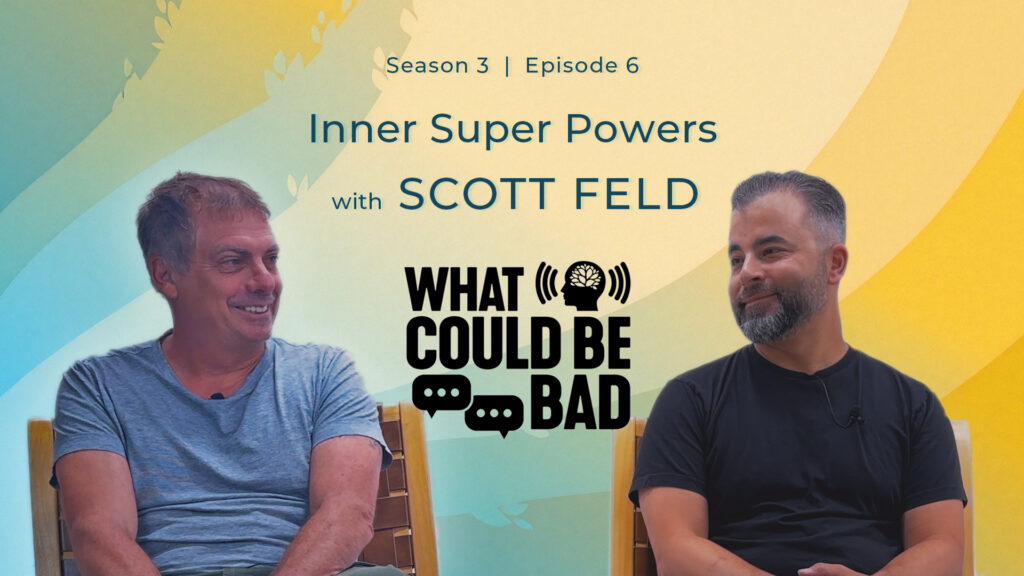
Scott Feld is an entrepreneur, DJ, coach, and author of Dax to the Max — a children's book built around the idea that kids have an inner superpower capable of defeating self-doubt and replacing "stinking thinking" with real resilience. After losing his 25-year party company during the pandemic, Scott turned to what he'd been studying his whole life and created a book and course series giving kids practical tools to build confidence, manage their emotions, and take ownership of their mindset. In this conversation, Benj and Scott get into the concepts behind the book, why winning shouldn't always be the goal, how generational patterns shape the way we parent, and why proactive mental health is the vitamin before the medicine. This one's for the parents, the coaches, and anyone who's had to start over and build something new.
This is an episode of What Could Be Bad where Benj interviews Lita Abella, a former LAPD officer, attorney, author, coach, and public speaker who joined him in North County, San Diego to discuss her work on trauma, resilience, and mental health. Lita opens up about enduring childhood physical abuse from her mother, marrying at 17 to escape her household, and navigating subsequent challenges including a first marriage to a husband with alcohol and drug problems — experiences she didn't recognize as trauma until writing her book. The conversation explores her "Abella model" for processing trauma, which includes steps like identifying the issue and "Link and Leverage" — connecting the pieces and applying action such as therapy, coaching, or support groups. They close by discussing positive cultural shifts in law enforcement around mandated mental health training, the importance of organizations holding regular check-ins for high-stress professions, and the self-assessment tools available on Lita's website to help people take a first step toward seeking support.

To be notified of our latest episodes follow on YouTube and Spotify.

Support the Podcast!

We are now set up to accept 501(c)3 donations. You can support the pod and receive a tax benefit in the process. Help us elevate and de-stigmatize mental health conversations now!

Disclaimer: The information and reference materials contained here are intended solely for the general information of the reader. It is not to be used for treatment purposes, but rather for discussion with the patient's own mental health professional. The information presented here is not intended to diagnose health problems or to take the place of professional medical care. The information contained herein is neither intended to dictate what constitutes reasonable, appropriate or best care for any given health issue, nor is it intended to be used as a substitute for the independent judgment of a mental health clinician. All content, including text, graphics, images and information, contained on or available through this web site is for general information purposes only. The major limitation of informational resources like www.whatcouldbebad.com is the inability to take into account the unique circumstances that define the health issues of the patient. If you have persistent mental health problems or if you have further questions, please consult your mental health care provider.